The Power of Black

A Historical and Contemporary Study of Black Clothing

Introduction

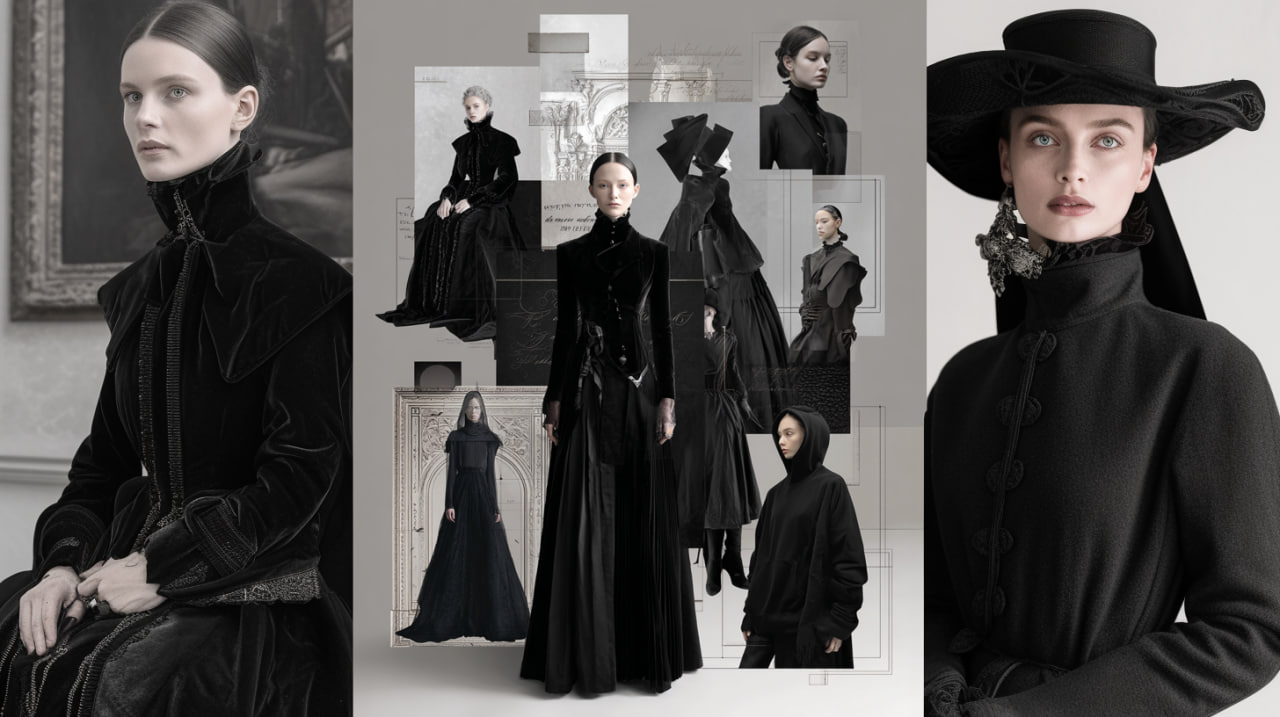
Black clothing has held a unique position in the annals of fashion and cultural symbolism. Far more than a color, black has served as a canvas for authority, rebellion, mourning, sophistication, and minimalism. This lecture will explore the historical roots of black garments, their shifting meanings over time, their place in contemporary fashion, the comfort they offer, and the diverse range of designs they continue to inspire.

Historical Background: From Nobility to Mourning Wear

The cultural association of black clothing dates back centuries, intertwined with concepts of status, morality, and power.

1.Medieval and Renaissance Europe

 ✔ In early European societies, black dyes were expensive and difficult to produce. As a result, black garments were often worn by royalty, clergy, and the wealthy elite.

 ✔ During the 15th and 16th centuries, black became a favored color among Spanish and Dutch nobility, seen as both somber and dignified. The austere aesthetic aligned with rising Protestant values.

2. 18th–19th Century: The Age of Mourning and Formality

 ✔ The Victorian era brought a codified approach to mourning attire, especially after Queen Victoria’s prolonged mourning for Prince Albert. Widows wore black for months, even years.

 ✔ In formal menswear, black suits and frock coats became standard for evening events, laying the groundwork for modern black-tie dress codes.

3.Early 20th Century: The Rise of Black in Fashion

 ✔ In the 1920s, Coco Chanel famously introduced the “little black dress,” transforming black from a symbol of grief to one of elegance and versatility.

 ✔ Black was embraced by artists and intellectuals throughout the 20th century—worn by beatniks, existentialists, and avant-garde designers as a symbol of rebellion and sophistication.

Contemporary Fashion and Black Clothing

In the modern wardrobe, black garments are both foundational and expressive, spanning a range of aesthetics from classic to subversive.

1.The Universality of Black

 ✔ Black remains a dominant color in fashion collections due to its neutrality, adaptability, and perceived slimming effect.

 ✔ It is the default for formal occasions, workwear, and creative professions—favored by designers and stylists for its visual clarity and professional polish.

2.Fashion Subcultures and Black Identity

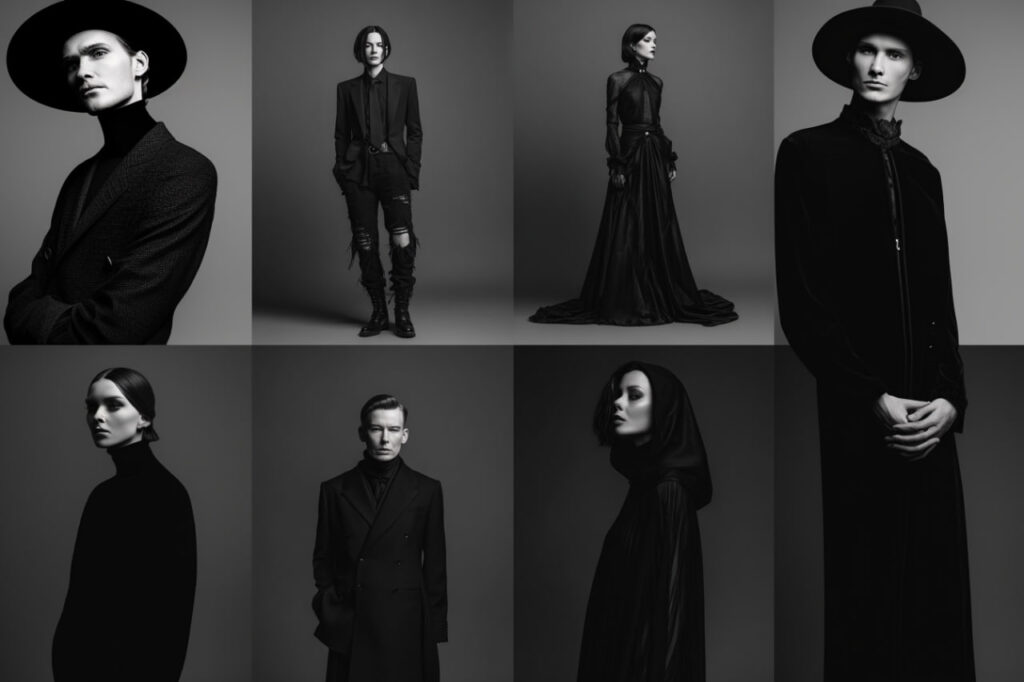
 ✔ Subcultures such as punk, goth, minimalists, and streetwear often center their visual language around black clothing.

 ✔ In these contexts, black is not merely a color but a declaration of mood, ideology, or community affiliation.

3.Luxury and Streetwear

 ✔ Designers from Rick Owens to Yohji Yamamoto and Comme des Garçons have built empires on conceptual black designs.

 ✔ Meanwhile, streetwear brands use black for its sleekness, wearability, and association with urban cool.

Comfort and Practical Appeal of Black Clothing

Though often associated with elegance and formality, black clothing is also practical and comfortable.

 ✔ Maintenance and Functionality: Black hides stains and signs of wear more effectively than lighter colors, making it a staple for work uniforms and travel clothing.

 ✔ Thermal Considerations: While black absorbs heat, it is often favored in colder climates and in layered styling.

 ✔ Psychological Comfort: Many individuals report feeling more secure, confident, or “put together” when wearing black.

 ✔ Body Neutrality: Black garments are often preferred for their slimming effect and their ability to obscure rather than highlight the body.

Design Versatility and Fabrication

Black’s neutrality allows it to be applied across diverse fabrics and silhouettes, enabling innovation in both construction and styling.

1.Texture Play

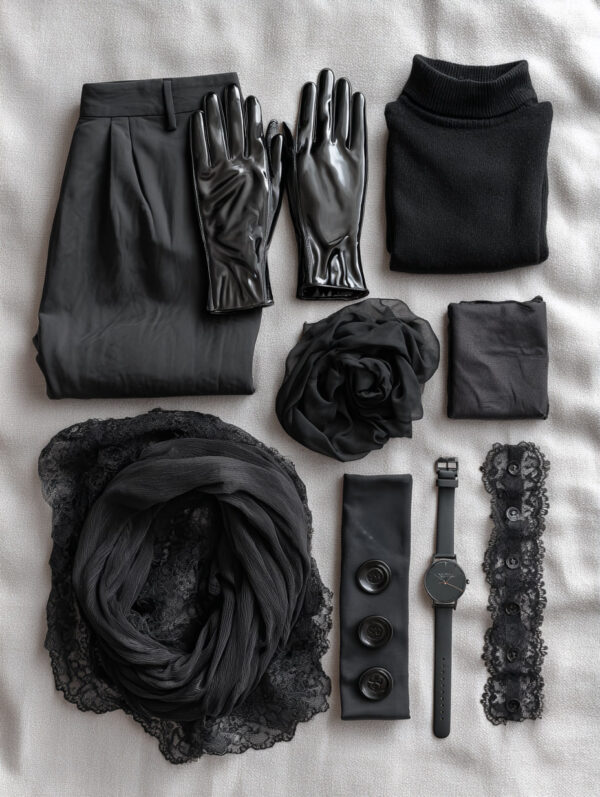
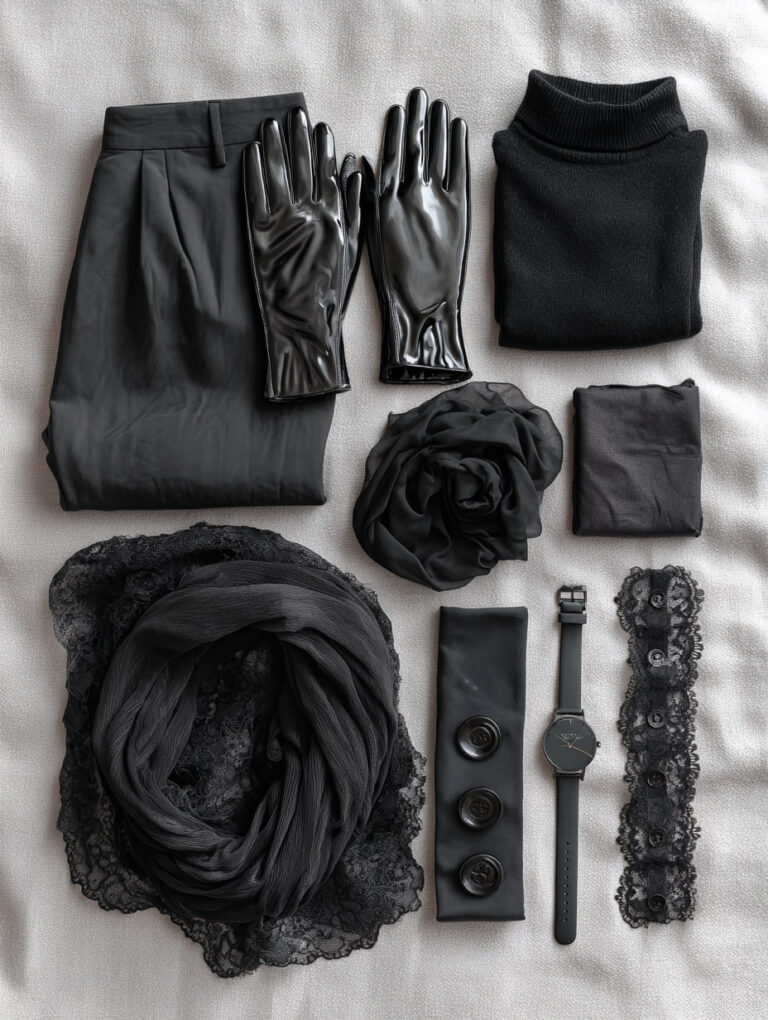
 ✔ Designers often experiment with texture—matte cotton, glossy patent leather, sheer tulle, or soft velvet—to add dimension to monochrome black outfits.

 ✔ The same garment in black takes on different characters based on its material: minimal, sensual, industrial, or romantic.

2.Layering and Structure

 ✔ Black’s visual clarity allows for architectural tailoring and complex layering without overwhelming the eye.

 ✔ It also works well with asymmetry, draping, and sculptural silhouettes, especially in conceptual and high-fashion design.

3.Everyday Staples

 ✔ Common wardrobe items like black jeans, turtlenecks, blazers, and ankle boots are endlessly recyclable across styles and seasons.

 ✔ These items function as fashion’s “building blocks,” enabling both simplicity and experimentation.

Symbolism and Perception of Black Clothing

The meanings attached to black clothing are deeply contextual and culturally constructed.

 ✔ Power and Authority: Black is often worn in professions requiring gravitas—lawyers, judges, executives.

 ✔ Mystery and Rebellion: It remains the favored color of outsiders and creatives—those who seek to define themselves outside the mainstream.

 ✔ Elegance and Minimalism: In contemporary minimalism, black represents restraint, clarity, and intentionality.

 ✔ Mourning and Reflection: Across many cultures, black continues to signify loss, contemplation, and reverence.

Conclusion

Black clothing is not merely a style—it is a language, one that has spoken across centuries of social change, artistic movements, and personal identities. Its ability to adapt, absorb, and endure places it at the very foundation of the modern wardrobe. Whether signaling elegance or rebellion, concealment or clarity, black garments possess a universality that few other colors can claim. In design, comfort, and symbolism, black remains not just a color of fashion—but a cornerstone of fashion itself.

Want some more? Here...

Press to Impress

The Ironing Trick That Instantly Upgrades Your Sewing
There’s a silent hero in every well-sewn garment, and it’s not the machine, the fabric, or even the hands that stitched it. It’s the iron. While it may seem mundane compared to the thrill of cutting fabric or the satisfaction of topstitching, pressing is one of the most powerful tools in your sewing arsenal. And yet,it’s often skipped or rushed, especially by beginners eager to see a project come together.

Read more

Pajamas as Outerwear

Pajamas as Outerwear: The Rise of Relaxed Luxury in Fashion

Pajamas have long been associated with comfort, relaxation, and bedtime rituals.

Read more